
Does Colorado Car Insurance Cover Sliding on Ice?
See which coverage may apply after an icy crash, what you could pay out of pocket, and how to check rental and towing benefits.
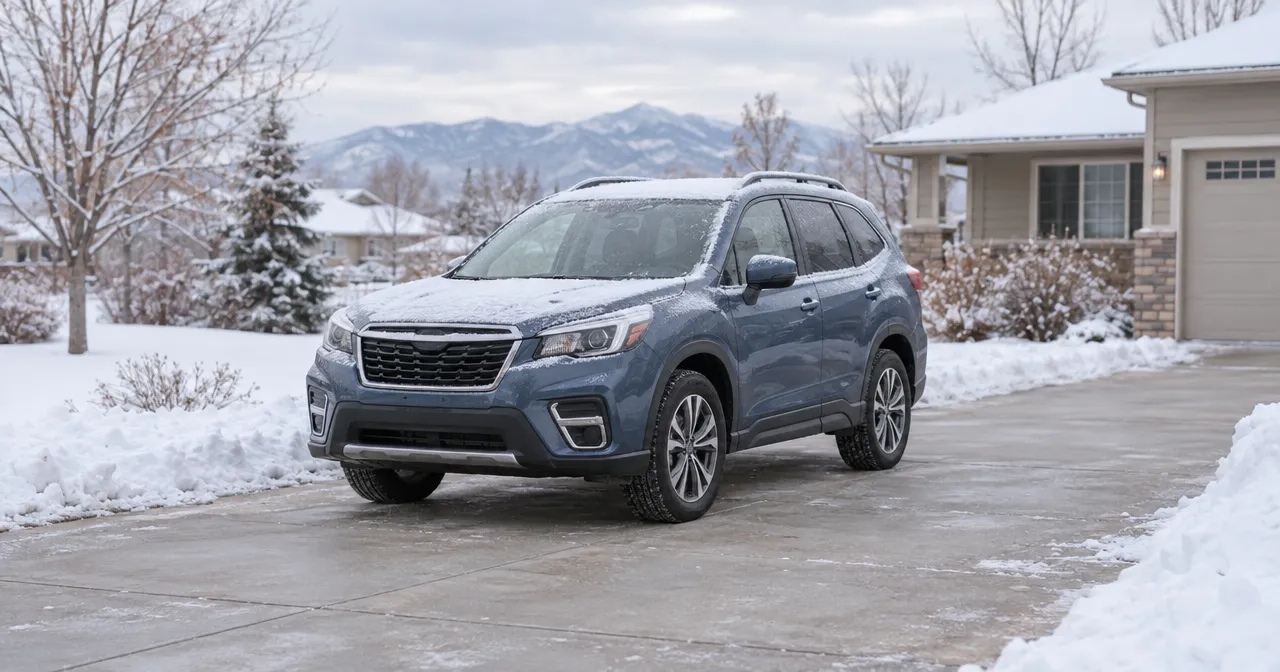
You’re on a school run in Longmont when the car slides on ice and hits a curb. No one is hurt, but the wheel is bent and the car needs a tow. Will your insurance help pay for the repair? And how will you get the kids to school while the car is in the shop?
If you slide on ice and hit something, collision coverage is usually what you’d check for damage to your own car. If a snow-heavy branch falls onto your parked car, you’d usually check comprehensive coverage instead. A tow or a rental car raises a separate question. Those services aren’t automatically included just because your policy covers the damage.
Start with what damaged the car
The weather tells you why the road was slippery. It doesn’t tell you which coverage may apply. The Colorado Division of Insurance’s auto guide distinguishes between damage from hitting another vehicle or object and damage from causes such as falling objects. Here’s how that distinction plays out on the same snowy morning:
- You slide into a curb, fence, or guardrail. Collision is the coverage to check for your own car, even if no other driver was involved. If you’re legally responsible for damaging someone else’s fence or a public guardrail, property damage liability may apply to that separate bill, up to your limit.
- Another car slides into yours. The other driver’s property damage liability may pay if that driver is found responsible and has applicable coverage. If you use your own collision coverage, your deductible generally applies at first. Your insurer may try to recover it, but don’t budget as though you’ll get it back.
- A branch breaks under the weight of snow and lands on your car. Check comprehensive coverage, sometimes called “other than collision.” But if the branch is already lying in the road and you drive into it, check collision. It’s the same branch, but it caused the damage in a different way.
- You get stuck in snow without damaging the car. There may be no repair claim at all. Ask whether roadside assistance includes pulling the car free, a service often called winching. If the car won’t start because the battery has worn out, a jump-start and the cost of a new battery are also two different things. Comprehensive coverage isn’t a maintenance plan.
Colorado requires auto liability coverage, but it doesn’t require you to buy collision or comprehensive. Your lender or leasing company may require both. If you only carry liability, your own policy’s liability coverage won’t repair your car after a solo slide into a curb. For the separate question of how much protection you have for injuries or damage you cause, see our guide to Colorado car insurance requirements.
Check the deductible on the car you actually drive
A deductible is the part of a covered loss you take on yourself. Your policy summary, called the declarations page, is a good place to start. Find the exact car, then read the collision and comprehensive rows separately. One vehicle can have different deductibles for those two coverages, and the coverage you chose for one family car may not match what you chose for another.
Say your car slides into a curb on the way home from Berthoud. The insurer accepts $2,400 in collision repairs and your collision deductible is $1,000. In that simplified example, the insurer would pay $1,400 toward those repairs. If the accepted repair cost was $850 instead, it would fall below your deductible and there would be no collision payment. The same $1,000 deductible wouldn’t automatically apply if a branch fell onto the car. For that, you’d check the comprehensive deductible.
A higher deductible may lower your premium, which is what you pay to keep the policy in force. To see if the tradeoff makes sense, ask for the price with only the deductible changed. In a made-up example, going from $500 to $1,000 saves $100 on a year’s premium but leaves you responsible for up to $500 more on a covered repair. The question is whether you could comfortably find that extra $500 on short notice, not whether you like the smaller bill today. Ask for the annual price difference in writing and make sure the change also fits any loan or lease requirements.
What if the car can’t be repaired economically?
A bent wheel may be fixable. A harder hit can leave a car with repair costs that don’t make sense compared with what it was worth before the crash. If your insurer treats your car as a total loss, the starting point is generally its actual cash value, or what the car was worth just before the damage, not the price you originally paid. Mileage, condition, options, and comparable vehicles can affect the valuation. The National Association of Insurance Commissioners’ consumer auto guide explains how a total-loss valuation differs from a repair payment.
If your car is totaled, ask for the valuation report and check the details against your car. Did it list the right trim, mileage, and options? Were the cars used for comparison similar to yours? If something looks wrong, bring the specific detail to your claims representative and provide any records you have. That gives you a more useful starting point than the asking price of a single car you found online.
The valuation is separate from your loan balance. Suppose the car is valued at $15,000, your collision deductible is $1,000, and you still owe $17,000. Before any applicable taxes, fees, or other adjustments, that leaves $14,000 toward the loan and a $3,000 shortfall. Standard collision coverage doesn’t erase that debt. The Consumer Financial Protection Bureau’s guide to gap protection explains what it’s designed to do. If you bought it through financing or added loan or lease coverage to your policy, check what it pays, including whether it accounts for the deductible and what limits apply.
Even if your car is paid off, its age isn’t the only thing that matters. Ask what it would cost your family to replace it on short notice. A car with a modest market value can still be the only one that gets everyone to work, school, and appointments. Look at what you’d save by dropping collision and what you’d have to pay yourself after a crash.
A covered repair doesn’t necessarily include a rental or a tow
Rental reimbursement is generally an optional benefit that may help pay for temporary transportation while your car is out of use because of a covered loss. It isn’t the same as insurance for a car you rent on vacation. Ask when the benefit starts, how much it allows per day, whether there’s a total dollar or day limit, and when it ends if your car is totaled. Farmers’ claims FAQ explains why a drivable car waiting for a shop appointment may be treated differently from one that can’t be driven. It’s worth asking what happens if the repair is below your collision deductible. A car can be out of service without qualifying for rental reimbursement.
Say your benefit allows $40 a day and the rental costs $58 a day. If all eight days are eligible, you’d still be looking at an $18 daily difference, or $144, before any charges the policy doesn’t include. Check whether the daily amount would get you a vehicle that can fit your family and any car seats you need. If you have a second car and can share it for two weeks, you might weigh that benefit differently from a household that has to replace its only ride right away.
Roadside assistance addresses a different problem: getting a disabled or stuck car moving or towed. Check whether your plan includes winching, how far it will tow, and whether you should call the plan’s dispatch number before hiring a tow yourself. If the tow follows an actual crash, ask your claims representative how the policy handles the tow and any storage fees. Find out where the car is being taken and who to call if it needs to be moved for inspection or repair. Keep your receipts rather than assuming every charge will be reimbursed.
Do a quick check before the next freeze
Pull up your declarations page and the policy pages that describe the coverage. If a rule was added or changed by an endorsement, that’s a document that goes with the policy. Ask your agent to point to the wording behind each answer, especially if you only remember being told you had “full coverage.” That phrase won’t tell you which deductible applies, whether rental reimbursement is listed, or what restrictions come with roadside assistance.
- Start with your daily driver. Is collision listed? What about comprehensive? Write down both deductibles and repeat the check for the other cars in the household.
- Name the drivers. If a teen has started driving or now uses a different car most of the time, ask how the policy lists the driver and vehicle, and whether any restrictions apply. Our Colorado teen driver liability checklist covers what to ask about household drivers and liability limits.
- Plan for the days without the car. Note the rental limit if you have one, and decide what you’d do for school pickups if the car were out of service longer. Save the roadside assistance number if it’s part of your plan.
- Ask what changes with the price. If you’re weighing a lower premium, ask which deductible, limit, or benefit would change. If none would change, ask what accounts for the price difference. Save the written summary and revisit it at renewal or when your household adds a car or driver.
If you’ve already slid on ice
Put safety first. When it’s safe, note where you were and what the car hit, and take photos if you can do so safely. If another driver was involved, keep their contact and insurance details handy. Report the loss promptly in line with your policy and ask the claims representative how to handle towing, inspection, and temporary transportation.
If a repair estimate is close to the deductible, ask what the estimate includes. The price of replacing a visibly bent wheel may not tell you whether anything behind it was damaged. Ask the shop how it will document any additional damage it finds and check with the claims representative before authorizing work you expect the insurer to pay for. The insurer reviews the facts and policy terms before deciding what applies.
If you’re a Colorado homeowner with kids at home, ask Seth Kamber for a no-pressure auto coverage review. Kamber Insurance Agency in Longmont can help you understand what’s on your policy, what’s missing, and what you’d pay yourself. You can come back with questions when a car or driver changes, even after your policy is in place.