
Sewer Backup and Sump Pump Overflow: What Colorado Home Insurance May Cover
A basement backup is not the same as a burst pipe or flood. Learn which policy terms, limits, and deductibles Colorado families should check.
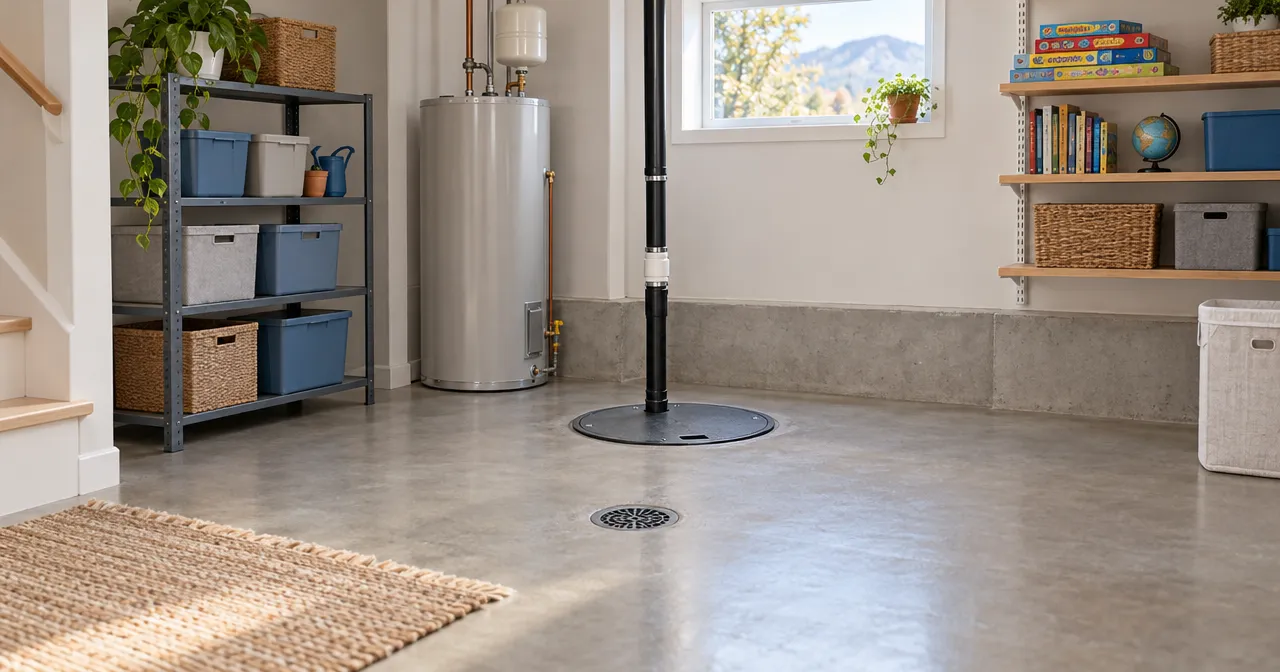
You walk downstairs to get a board game and find water around the basement floor drain. Is it a sewer backup, a failed sump pump, or rainwater coming in from outside? Those can look similar from the top step. Your insurance policy may treat them very differently.
For a Longmont family with bedrooms, toys, storage, or a home office downstairs, the useful question is not just whether the house is insured. It is where the water came from, which coverage applies, and how much that coverage could pay. The answer depends on the policy language and the facts of a particular loss. Use this guide to know what to ask before a claim, not to predict a claim decision.
First, trace the water's path
Think of three routes into the same basement:
- Water comes out of a drain or toilet. A blocked sewer line or drain pushes wastewater back into the house. A standard homeowners policy may not cover this route unless water-backup coverage is included or added.
- Water rises out of a sump pit. A pump that stops working, loses power, or cannot keep up may let water overflow. Whether a water-backup endorsement includes sump overflow depends on its exact wording and exclusions.
- Water comes across the yard and through a door or foundation opening. That is a flood or surface-water question, not automatically a drain-backup claim. A separate flood policy may be needed, subject to its terms.
There is a fourth, different situation: an indoor supply pipe breaks and releases water into a room. That is usually analyzed under the homeowners policy's plumbing-water provisions, with its own exclusions and conditions. Our frozen-pipe guide explains one version of that problem. Do not assume identical-looking puddles get identical insurance treatment.
The National Association of Insurance Commissioners (NAIC) lists sewer backup as a common optional homeowners coverage. The word optional matters. A declarations page showing a large dwelling limit does not prove that water backing up through a drain is covered.
What a water-backup endorsement can and cannot do
An endorsement is a change to your policy. A water-backup endorsement may extend coverage to damage caused by water that backs up through sewers or drains or overflows from a sump, depending on the form purchased. Ask your agent to show the actual endorsement, not just a short name on a quote.
Suppose a blockage sends wastewater out of a floor drain into a finished basement. Under an applicable endorsement, eligible cleanup and repairs to damaged flooring, drywall, or other insured property may be considered. Damaged furniture and stored belongings may have different valuation rules. Coverage for temporary lodging, mold-related work, or access to plumbing should never be assumed. Look for specific language on each expense, including any sublimit.
The endorsement generally addresses resulting damage, not every part of the problem that caused it. Clearing a clog, replacing a worn pump, or digging up a deteriorated sewer pipe may be a maintenance or repair cost. Ask separately whether the policy has any service-line or equipment-breakdown coverage, what each one actually covers, and whether it is available for your home. A water-backup endorsement is not a blanket promise to fix the pipe outside.
Check exclusions carefully. Some forms distinguish a sudden backup from ongoing seepage or a recurring unresolved condition. Flood-related water, groundwater pressure, and water entering through walls may be treated differently. A backup triggered by a wider flood can raise questions under both the home and flood policies. The adjuster must assess the cause and the applicable contract language. Avoid describing all basement water as a "sump claim" before the source is known.
Limits and deductibles can leave a sizable bill
A water-backup endorsement may have its own limit, separate from the main amount insured for the house. It may also have its own deductible. Imagine a policy that lists a $10,000 backup limit and a $1,000 applicable deductible. If an adjuster finds $8,000 in eligible damage, a simple illustration leaves $7,000 after that deductible, before any other policy terms. If eligible damage is $15,000, the $10,000 limit could leave substantial costs with the homeowner even before the deductible and other restrictions are considered. The exact calculation depends on how that particular form applies its limit and deductible.
A limit must fit the space at risk. A basement with only bare concrete and a utility sink is different from one with finished walls, flooring, a laundry room, and children's belongings. Estimate what cleanup, removal of damaged materials, repairs, and replacement of contents could involve. These are planning questions, not a prediction of cost or coverage.
Also ask how damaged belongings are valued. Actual cash value generally accounts for age and wear. Replacement cost generally uses the cost of a comparable new item, though payment may be subject to conditions such as replacing the item. A couch bought years ago may be worth less under an actual-cash-value settlement than it costs to buy a similar one now. Even if your regular belongings have replacement-cost coverage, confirm that the backup endorsement does not change the treatment of items damaged in a backup.
When someone suggests a lower premium, ask what changes in the quote: the backup limit, the deductible, the valuation of belongings, or whether backup coverage is present at all. A cheaper premium can be a reasonable budget choice if you understand what you would pay yourself. Discounts may apply; eligibility varies. Neither a discount nor an endorsement guarantees a claim result.
Who pays to repair the sewer line outside?
A backup inside the house and a broken line in the yard are two different expenses. In Longmont, the city says the property owner owns and maintains the sewer service line between the building and the sewer main. The city also says sluggish drains or a backup can come from the private service line or the public main, and its crew can investigate where the problem may be. A plumber may be needed for the private line.
That local responsibility does not mean your homeowners insurance automatically covers excavation or replacement of the line. If a service-line endorsement is available, read its covered causes, line definition, limit, deductible, and any exclusions for wear, roots, or pre-existing conditions. Water-backup and service-line coverages solve different questions: what was damaged inside versus what it takes to repair the line itself. If you are outside Longmont, ask the local utility where ownership changes, since the rules may differ.
When the problem is a flood instead
If heavy rain or snowmelt runs over normally dry ground and enters a basement door or window, ordinary homeowners coverage generally does not cover that flooding. Flood insurance is separate. The National Flood Insurance Program (NFIP) explains what counts as a flood, including certain surface-water runoff events. A flooded drain caused directly by wider flooding can be different from a drain blocked by a clog. Do not choose the label yourself; give the insurer a clear account of what happened.
Flood coverage has its own important gaps. Under the NFIP, building and belongings coverage are purchased separately and can have separate deductibles. Its policy overview also notes limited basement protection: personal property kept in basements and temporary housing costs are among the listed exclusions. A finished basement is not a reason to assume the flood policy will restore every room and item to its previous condition. Ask for the policy's definition of basement and for a room-by-room explanation of covered items. Private flood policies can differ, so read the specific form rather than applying NFIP rules to every policy.
Do not wait until storms are forecast to ask about flood insurance. NFIP policies generally have a 30-day waiting period, with specified exceptions. Confirm the effective date and coverage before relying on a new policy.
Prepare the basement before anything goes wrong
You cannot prevent every backup, but a few practical steps make the risks easier to manage and a loss easier to document.
- Find the drain, sump pit, and sewer cleanout. Ask a qualified plumber to explain what each does if you are unsure. Put the plumber's and utility's contact details where adults in the household can find them.
- Watch for warning signs. Repeated slow drains, gurgling, or a pump that runs unusually often deserve attention. Do not assume every slow drain means the city main is blocked.
- Maintain the equipment and line. Arrange appropriate inspection and maintenance of the sump pump, discharge route, and service line with qualified professionals. Consider a backup power option or alarm if it fits your home, but do not treat either as a guarantee against water damage.
- Keep vulnerable items off the floor. Store family photos, school keepsakes, documents, electronics, and children's belongings on shelves where practical. A small amount of contaminated water can make sentimental items hard to save.
- Record what is downstairs. A short phone video of the room and receipts or photos of major purchases can make an inventory easier after a loss. The NAIC's claim guidance recommends documenting damage and maintaining an inventory.
If your basement has recently been finished, tell your agent. New flooring, walls, appliances, and stored items can change what is at stake, even if the old endorsement limit stayed the same.
If you find water, start with safety and evidence
Keep children and pets out of affected areas. Sewage and floodwater may carry contaminants, and standing water near electrical equipment can be dangerous. Do not enter water to reach a breaker or pump. The CDC's guidance on reentering a flooded home urges caution around sewage and electricity. If there is an electrical hazard or contaminated water, get qualified help rather than tackling it yourself.
When safe, take photos and video of where the water entered, its depth, damaged materials, and affected belongings. Note the time you found it, recent weather, which drains are affected, whether the pump was running, and anything a plumber or utility worker observes. If sewage is backing up, avoid adding more water through sinks, showers, laundry, or toilets until a professional tells you what is safe.
Contact the insurer or your agent promptly. Ask how to document emergency cleanup, which temporary steps are appropriate, and whether an inspection is needed before permanent repairs. Save invoices and damaged-item lists. Make reasonable efforts to prevent further damage where safe, but do not throw away all evidence before asking what the claims team needs to see. If the house cannot be used, ask whether any applicable coverage addresses extra living expenses; do not assume a hotel bill will be paid.
A plumber can help identify the physical cause, but the plumber does not decide insurance coverage. Likewise, an agent can explain your policy and help you report a claim, but cannot promise what an adjuster will conclude. Write down the explanation you receive and request the policy provision when a limitation is unclear.
A seven-question policy check for Colorado parents
Put your declarations page and endorsements side by side and ask:
- Do I have water-backup coverage now, or is it only being proposed on a quote?
- Does its wording include sewer and drain backup, sump overflow, and power-related pump failure? What is excluded?
- What separate limit and deductible apply to this coverage, and how do they interact?
- Are damaged flooring, walls, belongings, cleanup, and temporary living expenses handled differently?
- Would repairing or excavating my private sewer line need a different coverage? What would it exclude?
- If surface water comes in from outside, do I have a flood policy, and what does it cover in the basement?
- If I finish the basement or change how we use it, should the backup limit or belongings coverage be reviewed?
For families in Longmont and elsewhere in Colorado, the point is not to purchase every possible add-on. It is to know which risks you keep and which ones you transfer to a policy, with limits and costs you understand. Kamber Insurance Agency is a Farmers Insurance agency in Longmont that offers coverage analysis to help families identify gaps and understand their choices. The conversation can continue after the policy is purchased, especially when the home changes.
If you are a Colorado homeowner with kids at home, contact Seth Kamber for a clear, no-pressure review of your home, auto, umbrella, or life coverage. Let Kamber Insurance Agency help you understand what is protected before a claim, with attention to your family rather than just the lowest premium.