
How to Switch Car Insurance Without a Coverage Gap
Confirm the new policy is active, match exact start/end times, notify your lender, and get written proof before canceling old coverage.
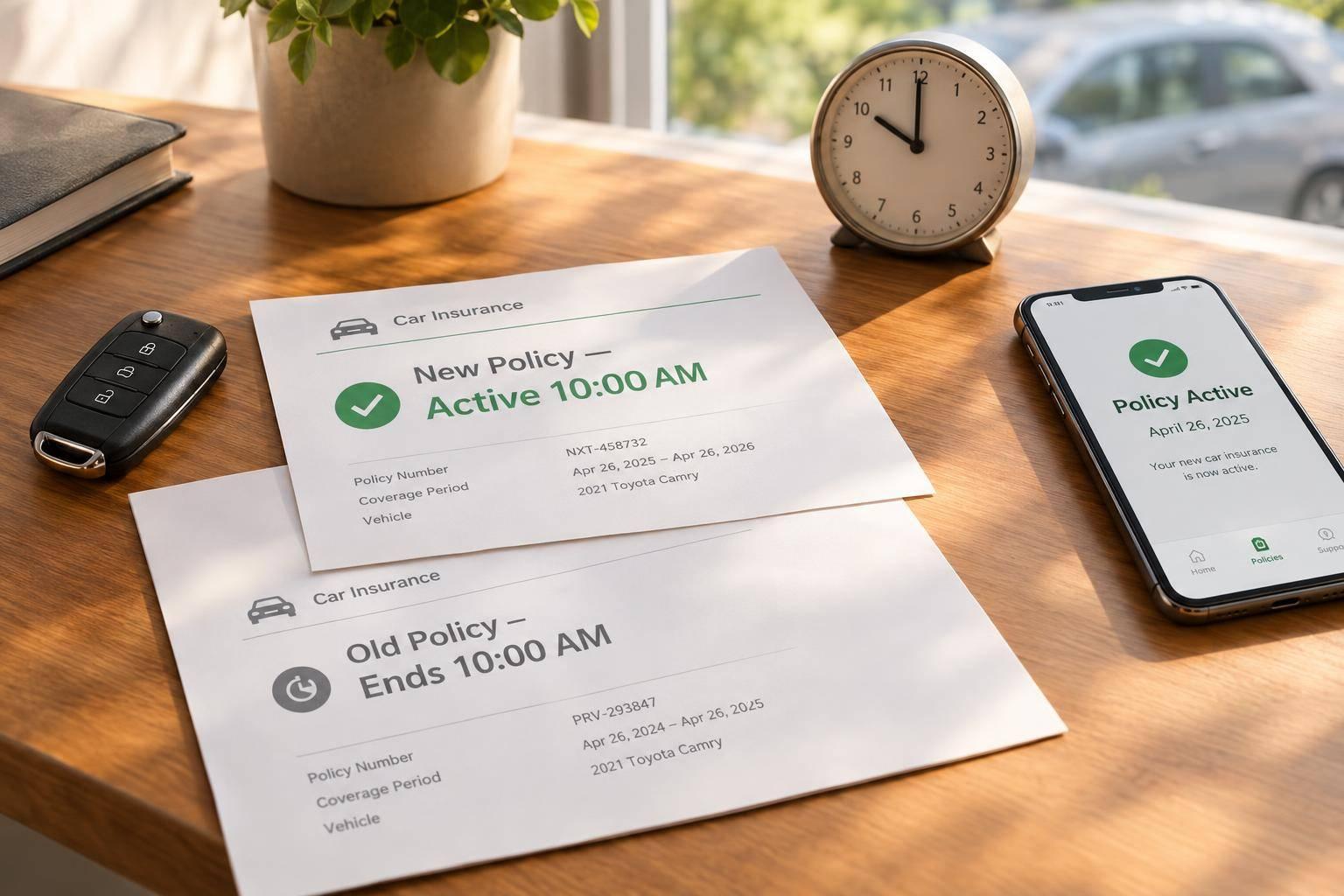
I wouldn’t cancel my car insurance until the new policy is active - not just quoted or approved. To avoid a coverage gap, I’d confirm the exact start and cancellation times, including the time zone, in writing.
Here’s the checklist I’d use:
Compare coverage before price. Check limits, deductibles, add-ons, drivers, vehicles, and driving use - not just the premium.
Verify the new policy. Get written proof of coverage and insurance ID cards, and correct any errors.
Update the lender or leasing company. Confirm the policy meets the contract’s requirements and send proof before canceling.
Close out the old policy. Get written cancellation confirmation, stop autopay, check any refund or balance, and save the records.
My rule: <u>confirm coverage first, cancel second</u>. Stopping payments doesn’t cancel a policy.
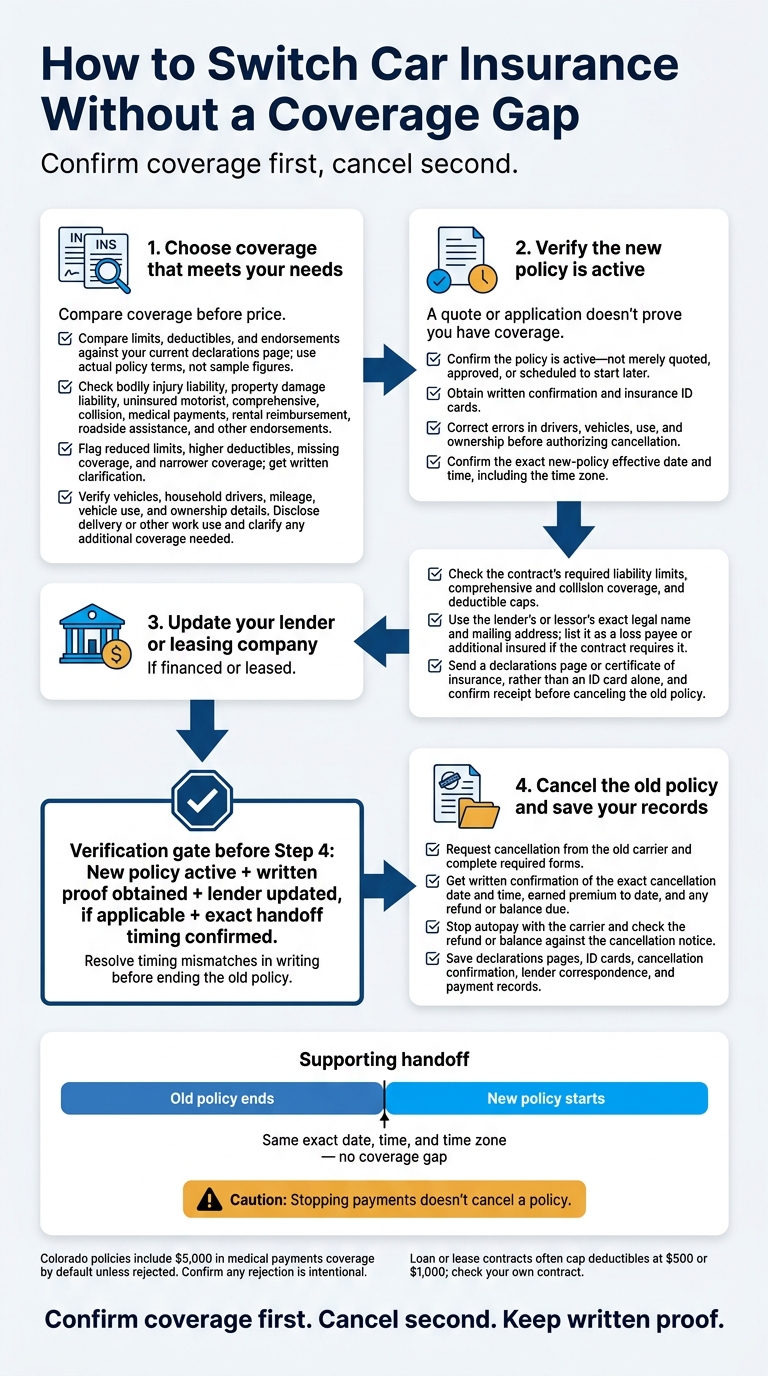
How to Switch Car Insurance Without a Coverage Gap
Step 1: Choose Coverage That Meets Your Needs
Check the new policy line by line against the policy details you gathered. Compare coverage before price: a lower premium may come with lower limits, higher deductibles, a missing vehicle, or a missing endorsement. Ask the agent to flag these changes before you approve the replacement.
Compare Limits, Deductibles, and Endorsements
Compare your current declarations page with the proposed policy documents using the table below. Enter the actual terms, not sample figures. Get written clarification for anything missing.
Coverage item | Current policy | Replacement policy | Difference or action needed |
|---|---|---|---|
Bodily injury liability | Record per-person/per-accident limits | Record proposed limits | Flag reductions |
Property damage liability | Record limit | Record proposed limit | Flag reductions |
Uninsured motorist | Record limits or rejection | Record proposed limits or rejection | Check for reductions or omissions |
Comprehensive | Record deductible and endorsements | Record proposed deductible and endorsements | Flag a higher deductible or narrower coverage |
Collision | Record deductible | Record proposed deductible | Check whether the out-of-pocket cost fits your budget |
Medical payments | Record limit or rejection | Record proposed limit or rejection | Confirm changes are intentional |
Rental reimbursement | Record limit, if included | Record proposed limit | Check for reductions or omissions |
Roadside assistance | Record towing limits, if included | Record proposed limits | Confirm benefits meet your needs |
Any other endorsements | Record each endorsement and limit | Match each against proposed documents | Request missing endorsements or clarify exclusions |
Colorado policies include $5,000 in medical payments coverage by default unless rejected. Confirm that any rejection is intentional [3].
Check Vehicles, Drivers, and Vehicle Use
Make sure every vehicle you plan to insure appears on the proposal. Check whether each household driver is listed, excluded, or rated differently.
Verify the mileage and vehicle use entered on the proposal. Disclose any delivery or other work use, and ask whether it requires a commercial-use endorsement or different coverage. Settle these questions before approving the policy [4].
Step 2: Verify the New Policy Is Active
Before you cancel your existing policy, make sure the new policy meets your needs and is active. A quote or application doesn’t prove you have coverage. If the effective date is still in the future, the policy isn’t active yet.
Get Written Confirmation and Insurance ID Cards
Once you’ve confirmed activation, request written confirmation and insurance ID cards before canceling your existing policy. Check the listed drivers, vehicles, use, and ownership status. Have your agent correct any missing or incorrect details before you authorize cancellation.
Match the Exact Start and End Times
Check that the old policy’s end time matches the new policy’s effective time, including the time zone. Get any timing mismatch corrected in writing before you cancel.
Step 3: Update Your Lender or Leasing Company
Once your new policy is active, send proof to your lender or lessor before canceling the old policy. For a financed or leased car, the new policy must meet their requirements and start before the old one ends.
Check Lender Details and Required Coverage
Find the Insurance Requirements section in your loan or lease agreement. Check the required liability limits, comprehensive and collision coverage, and deductible caps. Contracts often cap deductibles at $500 or $1,000, so check yours before choosing a higher deductible.[3]
Use your lender’s or lessor’s exact legal name and mailing address. List it as a loss payee or additional insured if your contract requires it.[1][2] Send these details now so the lender can put the updated policy on file.
Send Proof and Confirm Receipt
Send the documents through your lender’s preferred channel. Use a declarations page or certificate of insurance, rather than an ID card alone, to show your coverage limits, deductibles, and lender listing.[3]
If your lender reports a gap, contact your agent immediately and resend the documentation.[1][2]
Step 4 and Conclusion: Cancel the Old Policy and Check for Gaps
Request Cancellation and Get Written Confirmation
Once you have written confirmation that your new policy is active and your lender has been updated, contact your carrier to cancel the old policy. Specify the replacement policy’s effective time and complete any required cancellation forms.
Ask for written cancellation confirmation showing the exact cancellation date and time, earned premium to date, and any refund or balance due. Cancel autopay with the carrier, too. Stopping payments does not cancel the policy.[2]
Check the Handoff and Save Your Records
Match the old policy’s cancellation date and time to the new policy’s effective date and time. There should be no gap in coverage. Resolve any mismatch before ending the old policy.
Keep your declarations pages, ID cards, cancellation confirmation, lender correspondence, and payment records together. These documents show your coverage dates, payment status, and compliance with lender requirements.
Keep the new declarations page and ID cards handy, and check any refund or balance due against the cancellation notice.
FAQs
Can I switch car insurance mid-policy?
Yes, you can switch car insurance mid-policy. You don’t have to wait until your current policy term ends.
Kamber Insurance Agency can review your coverage for gaps and chances to save, then manage the switch for you. The team walks you through each step, making sure your new policy is active before your old one is canceled so you don’t have a gap in coverage.
What if my policies briefly overlap?
A brief overlap is common when switching car insurance and helps keep you covered during the change. Kamber Insurance Agency offers free policy reviews to help you spot and manage overlapping coverage. If you’re unsure about policy dates or possible gaps, contact us for a review to help keep your coverage uninterrupted.
Will a coverage gap raise my rates?
A gap in coverage can cost you more, but it doesn’t automatically mean higher premiums on future policies. If you have a claim during that gap, you could face large out-of-pocket bills and possible legal trouble.
To avoid a lapse, make sure your new policy is active before canceling your old one.